Electrical problems in NYC buildings rarely start with a dramatic failure. They usually begin with “small” signs such as heat, smell, flicker, or noises that are easy to brush off during a busy day.
Until the day they’re not small anymore.
This is not a DIY checklist. The purpose of this guide is to help building staff and property managers recognize electrical red flags early, protect occupants, document what matters, and bring in qualified electrical service before a manageable issue becomes a major outage or safety event.
According to the National Fire Protection Association, electrical distribution and lighting equipment rank among the top causes of direct property damage from fires. Early warning signs matter, especially in dense, aging building stock like NYC’s.
Red Flag #1: Burning Smell, Scorch Marks, or Heat You Can Feel
This is one of the most serious and commonly ignored warning signs.
What it often looks like in real buildings:
- A persistent burning or “hot plastic” smell in a hallway, closet, unit, or mechanical space
- Outlet plates, switches, or wall sections that feel warm to the touch
- Discoloration, browning, or scorch marks near receptacles, cords, or equipment
What building staff should do immediately:
- Keep people away from the area
- Stop using the affected outlet or equipment
- Do not cover it up or “wait to see if it goes away”
- Escalate to qualified electrical service
FDNY’s Electrical Home Safety guidance highlights warm outlets, damaged cords, and discoloration as early indicators of overheating that should be addressed before they escalate into fires.
If you can feel heat or smell burning, the issue is already past the “monitoring” stage.
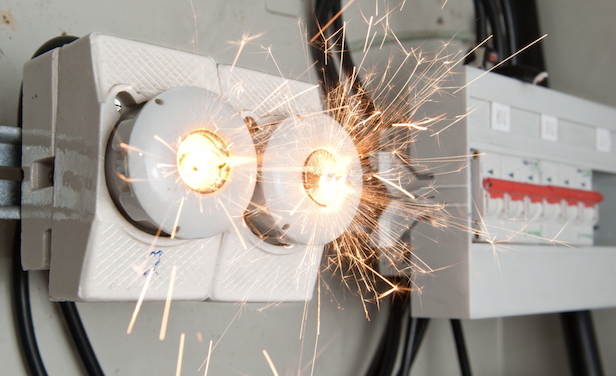
Red Flag #2: Sparks, Arcing, Buzzing, or “Snapping” Sounds
Electrical systems should not be noisy.
What this can look like:
- Visible sparks when plugging in or unplugging equipment
- Buzzing or humming from an outlet, switch, or panel
- Repeated snapping or crackling sounds near devices or electrical rooms
Why does this matter? These sounds often indicate loose connections, damaged components, or arcing; conditions that can worsen quickly under load.
What to do:
- Treat this as a serious warning, not a nuisance
- Restrict access near the source
- Document exactly where and when it’s happening
- Escalate to qualified electrical service
If your building is seeing sparking, arcing, or unusual electrical noise, Omnia’s Electrical services support NYC facilities teams with professional troubleshooting and safe repair without guesswork.
Red Flag #3: Frequent Breaker Trips, Equipment Resets, or “It Keeps Coming Back”
This is one of the most common patterns in buildings and one of the most misunderstood.
What building staff often sees:
- The same breaker tripping repeatedly
- Equipment that constantly reboots or shuts down
- Temporary “fixes” that only last hours or days
The key building-ops rule: Repeated trips are a symptom, not a solution.
Breakers are designed to trip for a reason. Resetting them repeatedly without understanding why they’re tripping increases risk and often masks a growing problem.
What to do instead:
- Stop treating resets as routine
- Capture patterns:
- Time of day
- Equipment running at the time
- Areas or circuits affected
- Escalate before the issue turns into a larger outage
Omnia’s Maintenance team helps buildings move from recurring electrical emergencies to planned, permanent fixes using clear documentation and follow-through.
Red Flag #4: Flickering Lights, Voltage Issues, or Partial Power
Electrical problems don’t always mean a full blackout.
What this can look like:
- Lights dimming when equipment turns on
- Flickering across hallways, stairwells, or multiple units
- Situations where “half the floor has power”
Why does this matter? Even when tenants technically still have power, inconsistent electrical behavior can signal overloaded circuits, failing connections, or distribution issues that worsen under peak demand.
What building managers should do:
- Document scope:
- Which areas are affected
- When it started
- Whether it’s constant or intermittent
- Avoid loading circuits with temporary workarounds
- Escalate for service, especially if multiple areas are involved
Partial power is not a stable condition. It’s often a warning phase before a larger failure.
Red Flag #5: Panel Overheating, Electrical Room Heat, or Arc Flash Risk Areas
Electrical rooms and panels are not places for casual inspection if you are not qualified.
What matters here:
- Panels or electrical rooms that feel unusually hot
- Signs of overheating, discoloration, or odor near panels
- Any situation where staff feel unsafe being near energized equipment
The risk is not just shock, arc flash is a serious hazard around panels and switchgear.
OSHA’s arc flash guidance explains how arc flash incidents can occur during faults or equipment failure, reinforcing why only qualified personnel should open panels or work in these areas.
If something feels off in an electrical room, that alone is reason to escalate.
What NOT to Do (Well-Meaning Moves That Create Bigger Risk)
In real buildings, good intentions sometimes make situations worse.
Avoid these common mistakes:
- Do not open panels or remove covers if you are not qualified
- Do not keep resetting breakers to “get through the day”
- Do not rely on extension cords or power strips as long-term solutions
- Do not allow unlicensed or unpermitted electrical work
NYC DOB makes it clear that electrical work performed without proper permits can result in violations, fines, and liability for owners and managers, not just the person doing the work.
The Building Manager’s Electrical Incident Call Sheet
When you call for service, clear information saves time and reduces disruption.
Be ready to provide:
- Exact location (floor, room, closet, panel label if known)
- What you observed (smell, heat, sparks, flicker, repeated trips)
- Areas impacted (unit, stack, floor, building-wide)
- When it started and whether it’s constant or intermittent
- Photos or video only if safe to capture
- Any recent building activity (renovations, vendor work, new equipment installs)
When electrical issues disrupt operations or tenant safety, Omnia’s Service team focuses on fast response, clear communication, and a clean documentation trail for building management.
When to Escalate Immediately (No Waiting)
Escalate right away if you see:
- Burning smells, smoke, scorch marks, or visible sparking
- Buzzing or arcing near outlets, panels, or equipment
- Partial power across multiple areas
- Repeated breaker trips that return quickly
- Any electrical room or panel area that feels unsafe
If your building is showing these red flags, contact Omnia Mechanical Group to dispatch qualified electrical service before a small issue becomes a major outage.
Preventive Next Steps: How Facilities Teams Reduce Electrical Emergencies
Strong building teams don’t just react, they track patterns.
Helpful habits include:
- Logging recurring electrical issues (location, symptom, date/time)
- Noting correlations (after vendor work, during storms, peak load times)
- Scheduling proactive inspections for repeat problem areas
Omnia’s Compliance approach helps teams stay organized around code-driven requirements and safe documentation, and Omnia+ supports proactive maintenance planning across the systems you choose.
Red Flags Are the Warning. The Response Is the Difference.
Electrical issues are one area where “wait and see” can become expensive and dangerous fast.
The best building teams treat red flags as action triggers: protect people, document clearly, and escalate to qualified service.
If your building is seeing repeated electrical issues or you want a plan to reduce outages before the next cold snap or busy season, contact Omnia Mechanical Group to schedule a site visit and tighten up electrical reliability for your property.